
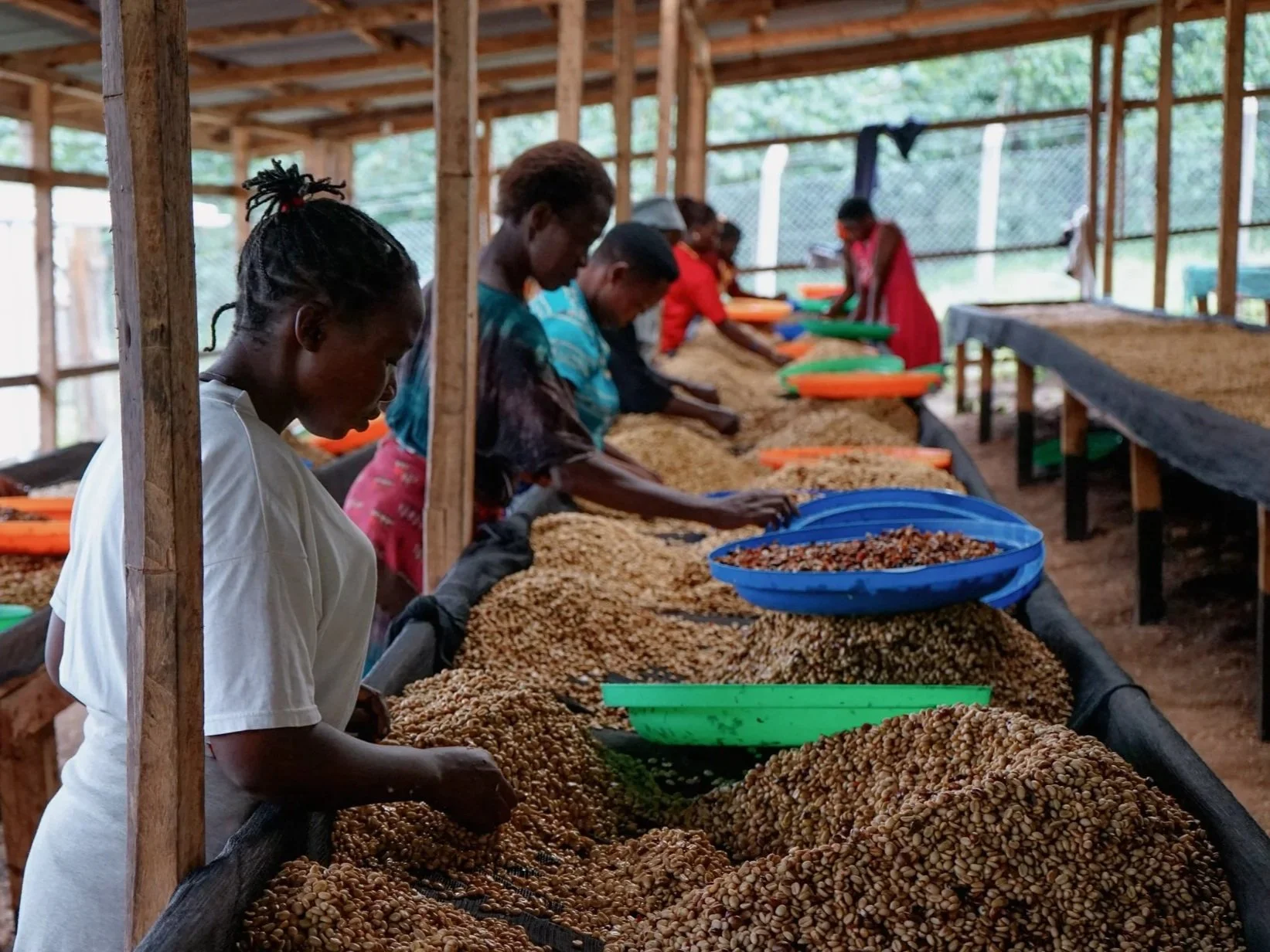
House Filter: Butawa | Uganda
Key Origin Info:
Producer: small-holder growers based around the Bukyabo area in Sironko District
Processed at: The Coffee Gardens central washing station in Kyambogo Village
Region: Sironko District, Eastern Uganda
Altitude: 1800-2200 masl
Variety: SL14, SL28 & Nyasaland
Process: Cherry Pulp Co-Ferment; de-pulped with the removed skin (pulp) added back into the fermentation tank, fermented for 23hr before being dried on raised beds in a covered solar dryer
Exporter: The Coffee Gardens | Importer: Falcon Speciality
Purchasing history: Since 2024
Cup profile: Creamy, brown sugar & pear

Coffee plants flowering at one of the growers “coffee garden”.
About this coffee and The Coffee Gardens:
This coffee is produced by The Coffee Gardens based in the Bukyabo area, Sironko district. The lot is composed of coffee harvested by 209 local small-holder farmers who sell coffee cherry to the central washing station run by The Coffee Gardens - a progressive coffee processor and exporter with the purpose of improving farmers’ income and livelihoods through production of quality coffee. With fairness, transparency and environmental protection at the forefront, TCG supports farmers through a number of incentives including post-season bonuses, additional employment opportunities, tree distribution and a range of all-year-round training programs. This lot is their signature washed coffee, where the cherries are de-pulped, fermented in water for 40 hours before being slowly dried and sorted for export.
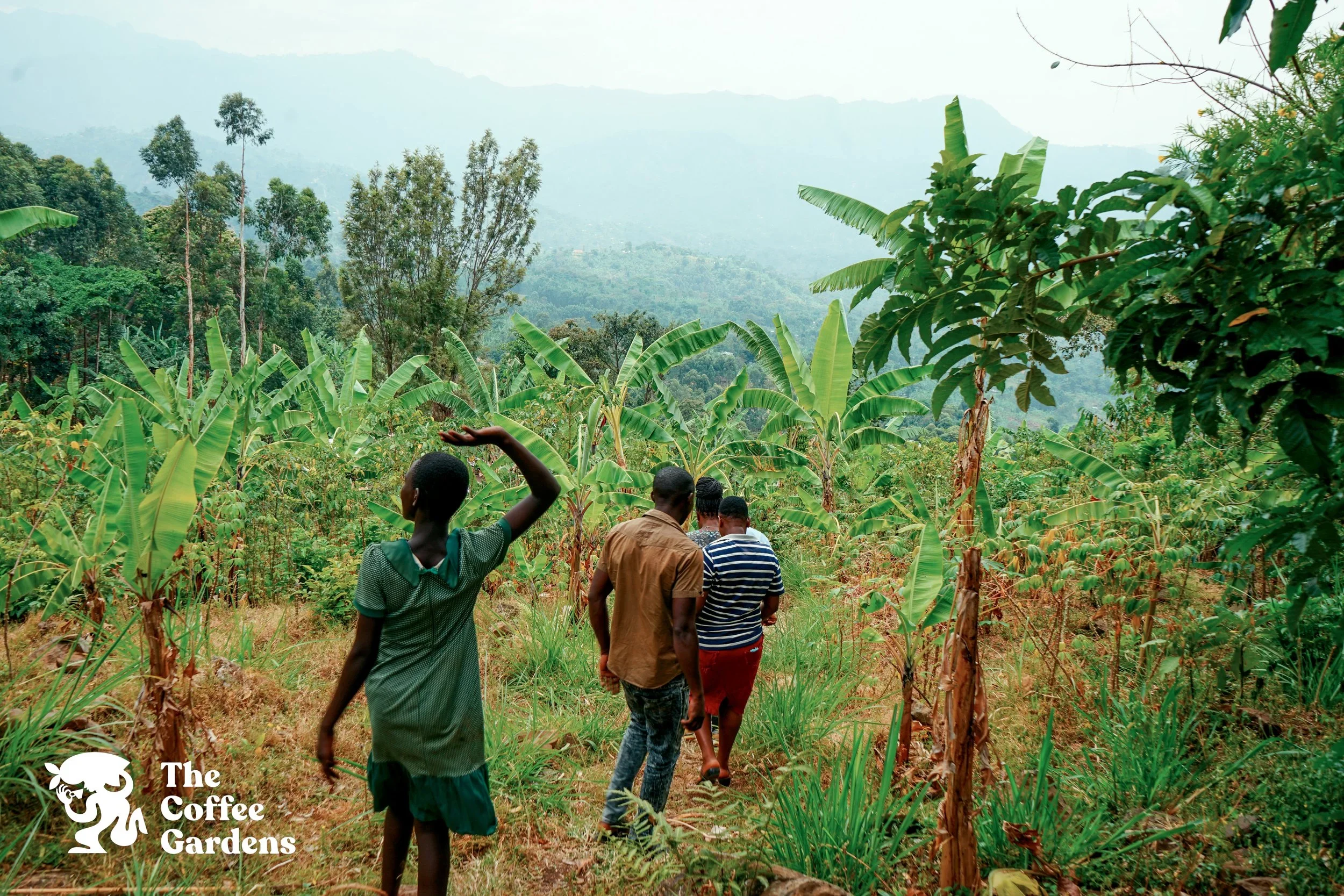
Hiking through a coffee garden. Image courtesy of The Coffee Gardens.
More about The Coffee Gardens:
The Coffee Gardens project was established in 2017 by three friends - Dana, Michael and Shak - with the goal to produce specialty coffee in an ethical way, offering a transparent and direct link between our coffee farmers and coffee drinkers. Initially working with only 1 farming family in their first years, the operation quickly grew and they now work with over 600 coffee growing families.
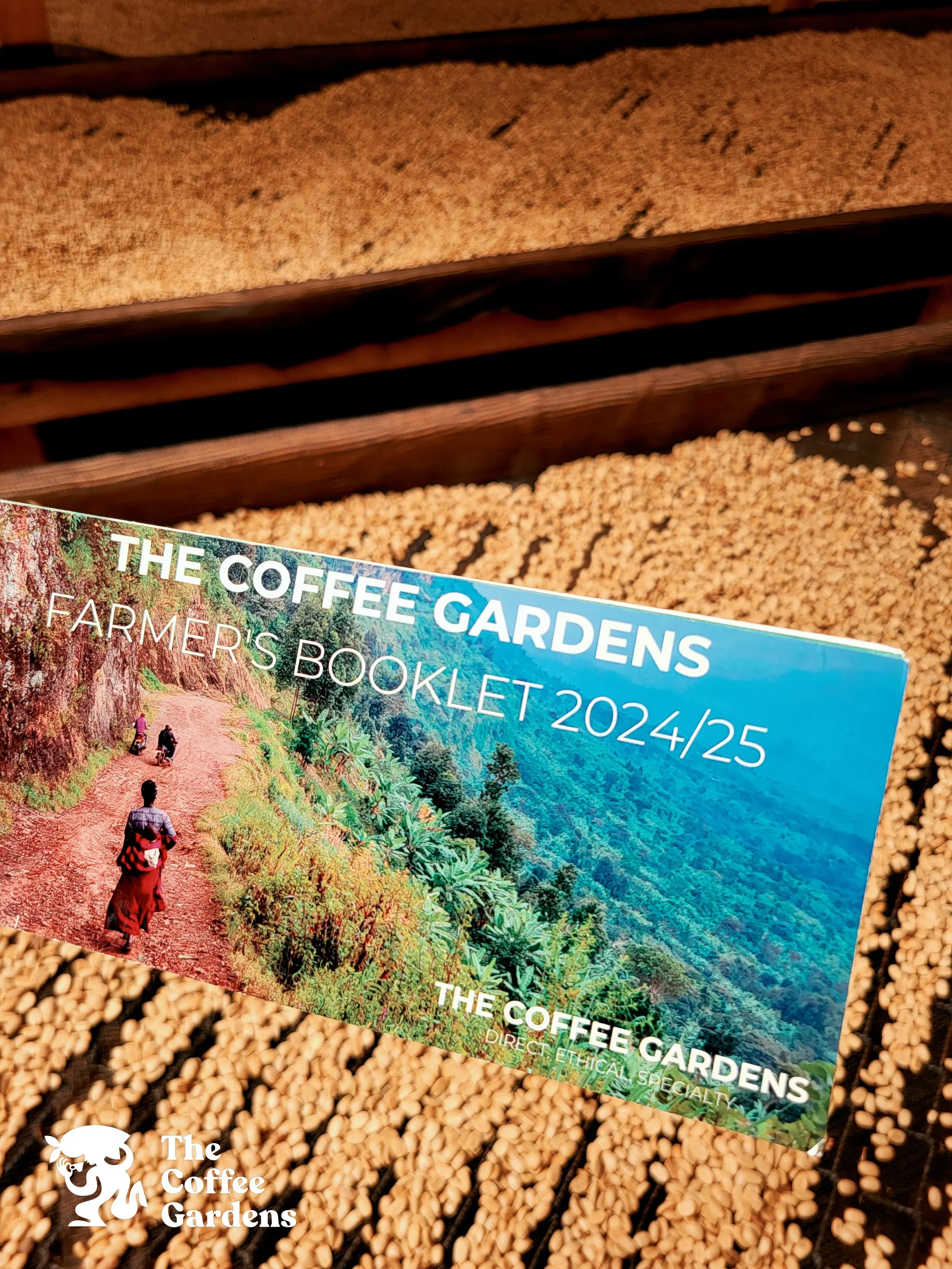
As the CG team explains: Quality is our reason for being. It allows us to pay farmers high prices and still invest in agricultural, social and environmental activities. Of course, the foundation of a good coffee is fresh, red, ripe cherries full of sugars to feed the fermentation process. In a time of intense price volatility, we work hard to create the right incentives so farmers decide to deliver only red cherries day after day. We also have rigorous sorting protocols in place starting in farmers’ gardens, and at every stage from our buying centres, throughout processing and all the way to export preparation.
Whilst quality is at the centre of their coffee production, The Coffee Gardens team work holistically to contribute to positive local development. With clearly defined objectives, they strive to improve farmers income and livelihoods, create and provide rural employment, promote gender equality, increase transparency and traceability throughout the supply chain, promote and work on environmental protection in the area and provide farmer training in Good Agricultural Practises (GAP).
The Coffee Gardens also incentivise and reward farmers through a number of different monetary and non-monetary ways. These include post-season bonuses, additional income-generating and employment opportunities, tree distribution and a range of all-year-round training programs. The Coffee Gardens is transparent with their partner farmers about buying policy and prices, providing each registered farmer with a contract and a buying-record book, communicating any price changes via SMS to registered farmers, and providing receipts for every transaction.
In their own words
We are more than a coffee buyer, processor and exporter. For our farmers, we try to be a reliable and consistent partner the whole year round. When we are not buying coffee, we deliver trainings and implement development projects.
When we consider impact, we think about economic, social and environmental elements - and these are all intertwined. A farmer with low income levels and limited savings may find it hard to follow sustainable practices and invest in their gardens. Instead, farmers may prioritise finding quick sources of income to meet urgent needs. So. by approaching the needs of farmers holistically, we are working to create long-term change.
You can find out more about their vision, impact and methods here.
We are very happy to be getting more coffee from the Coffee Gardens’ team again this year!
