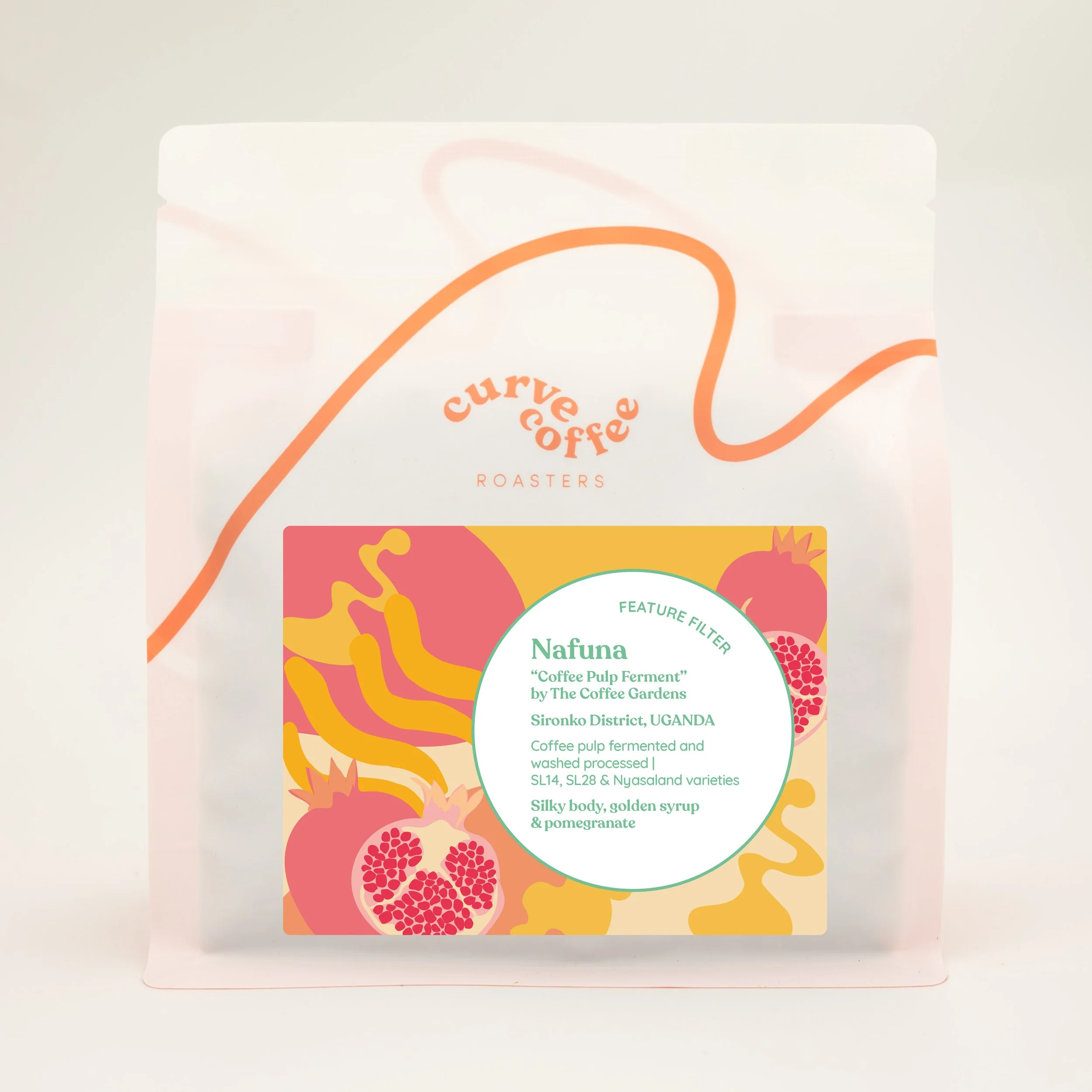
DECAF | Jardín | Colombia
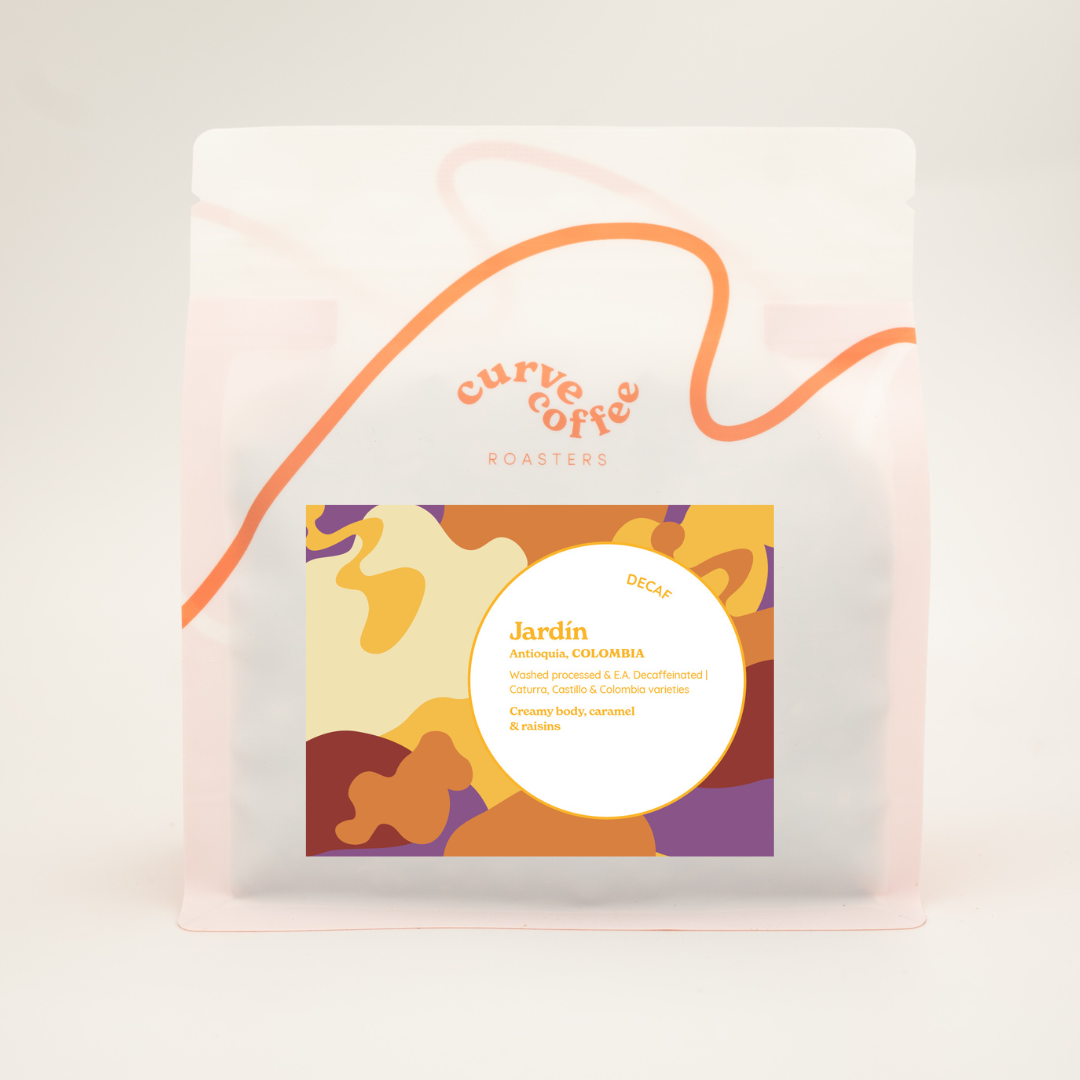
DECAF | Jardín | Colombia
Creamy and super tasty decaf. Washed processed and decaffeinated lot of local Arabica varieties produced by small growers based around the Jardin town in Colombia’s Antioquia region. Processed using the “sugarcane” or E.A. decaffeination method.
Creamy body, caramel & raisins
This coffee is roasted to suit most brewing methods and work well with milk.
Expect fuller body in filter brews, if you like a juicier filter brew we recommend using a lower temperature water than usual.
Key Origin Info:
Producer: Small and medium sized producers based around Jardín municipality, working with Helvetia association
Processed at: each farmer’s wet mill and consolidated by the Helvetia association
Region: Jardín municipality, Antioquia department
Altitude: 1700 - 2100 masl
Variety: Field blend of predominantly Castillo, with small amount of Caturra and Colombia
Process: Washed processed and E.A. “Sugarcane” decaffeinated
Exporter: Siruma | Importer: Falcon
Purchase history: With Siruma since 2019, from this particular Coop since 2025
Cup profile: Creamy body, caramel & raisins
More about this coffee:
This regional lot is composed of coffee produced by small and medium scale family farmers based in the Jardín municipality of Antioquia region. The lot is consolidated by Helvetia Cooperative with a collection point and presence in Jardín, working to add value for growers and leading sustainability programs in the region.
About the “Sugarcane” decaffeination process
Also known as E.A. - “ethyl acetate” decaffeination is a natural process that not only maintains great integrity of green-coffee flavour, but also allows us to offer a decaffeinated coffee that best supports a vertical supply chain. This is due to the fact that the growing, processing, and even the full decaffeination process all happens at the source in Colombia, meaning all value added by these processes stays within the country of origin and its communities.
How does it work:
The washed and dried green coffee is received at the decaffeination plant and it is steamed for approx. 30 minutes. A low-pressure steaming process opens the pores of the coffee, allowing for caffeine extraction.
Coffee is placed in a solution of water and Ethyl Acetate (E.A.), a naturally occuring compound and solvent derived through the fermentation of sugarcane. While submerged in the solvent, E.A. naturally bonds to the salts of chlorogenic acids within the coffee, allowing for the extraction of caffeine.
Once the solvent is saturated, the tank is drained and fresh solution is introduced. This continues for about 8 hours.
After the last of the caffeine has been extracted, the coffee is removed from the solution and prepped for another steaming. The final low-pressure steaming removes the remaining traces of E.A.
Decaffeinated coffee is then dried, physically polished to ensure cleanliness, and packaged for export.